Federal Lighting Standards: The Push for Cyan Signals in Driverless Fleets
Regulators are proposing a specific blue-green light to indicate autonomous operation while simultaneously relaxing legacy requirements for physical driver controls.
By Ishani Kapalli ·
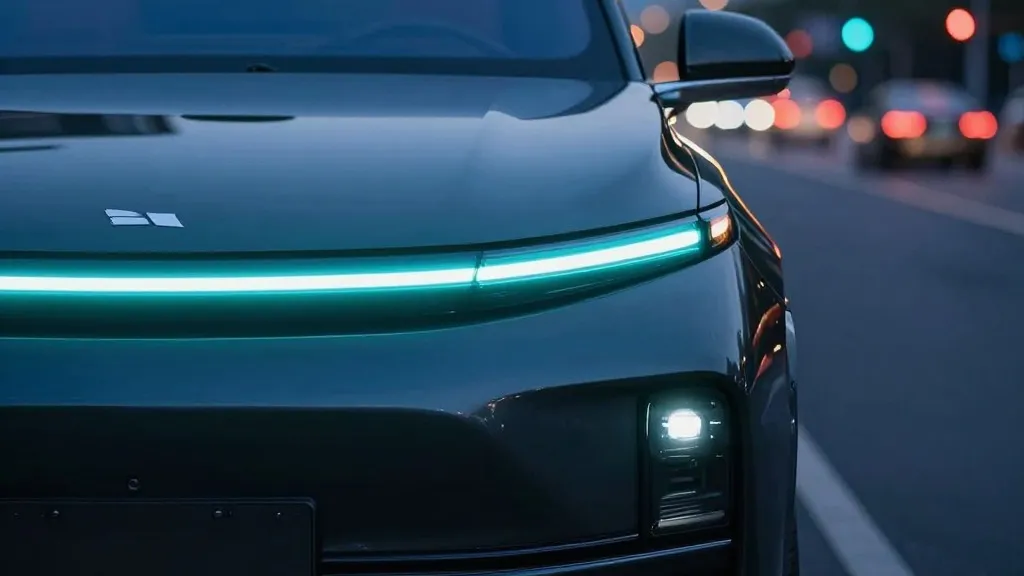
The National Highway Traffic Safety Administration has proposed that fully autonomous vehicles display a distinct cyan-colored light to signal to other road users that no human is at the wheel. This specific hue, positioned between blue and green, is intended to create a clear visual distinction from existing automotive lighting conventions. The agency argues that this color choice fills a gap in the current spectrum, which is already dominated by red brake lights, amber turn signals, white headlights, and the flashing blue or red lights associated with emergency services. By standardizing this signal, regulators aim to ensure that law enforcement and pedestrians can immediately identify when a vehicle is being operated by an automated driving system.
The move follows a prolonged period of uncertainty regarding how driverless cars should communicate their status. For years, the industry debated various methods, including flashing text displays, audio alerts, and custom light configurations, without reaching a consensus. Now, the feds are intervening to establish a uniform national standard. This approach allows major players such as Waymo, Nuro, Zoox, GM, and Mercedes-Benz to adopt a consistent legal framework rather than relying on fragmented state-level approvals or proprietary signaling systems.
There is some historical context for this specific color choice. Mercedes-Benz previously received state-level approval to use turquoise lights on its Level 3 Drive Pilot vehicles. Although the automaker has since abandoned that specific project in favor of a Level 2++ system, the precedent supports the argument that a unique color can be effectively integrated into vehicle design. NHTSA’s proposal seeks to elevate this concept from a localized experiment to a federal requirement, ensuring that any manufacturer choosing to implement these lights does so within a defined set of parameters for brightness and location.
While the cyan marker lamps would remain optional for manufacturers, the proposal creates a binding standard for those who choose to include them. This prevents a confusing patchwork of different colors and intensities across the market. Simultaneously, the agency is proposing to remove several lighting requirements that are obsolete for vehicles without human drivers. Current rules mandate the presence of physical hazard switches, manual beam shifters, and turn levers. The new proposal would eliminate these requirements, allowing automakers to design interiors without traditional controls.
The regulatory update also addresses technical testing standards. NHTSA is looking to update the 12.8-volt testing protocol to accommodate modern LED architectures, reducing administrative burdens for manufacturers. Additionally, the agency is considering removing rules that dictate the physical positioning of high-beam and low-beam lights relative to one another. These changes are part of a broader Department of Transportation initiative to streamline the deployment of autonomous vehicles, making it easier to build cars that lack steering wheels and pedals.
Despite these efforts to modernize regulations, regulators continue to enforce existing rules strictly where they apply. Last month, NHTSA initiated an audit query into the Tesla Cybercab to examine the technical data Tesla relied on during the certification process. The investigation focuses on the absence of certain design features, including sideview mirrors, pedals, and a steering wheel, which are currently required under Federal Motor Vehicle Safety Standard No. 108. This dual approach highlights the tension between encouraging innovation and maintaining established safety protocols.
The proposal marks a significant shift in how the federal government approaches autonomous vehicle design. By specifying both the signaling method and the removal of legacy controls, NHTSA is providing a clearer path for the industry. However, the optional nature of the cyan lights means that uniformity will depend on manufacturer adoption. As the debate continues, the focus remains on whether these new standards will sufficiently clarify the road environment for both autonomous and human-driven traffic.
Source: The Verge