22 launches: The new cost of getting to the Moon
A new internal estimate suggests that nearly two dozen rocket flights will be needed to fuel a lunar lander, raising concerns about the timeline for returning humans to the Moon.
By Zanele Khumalo ·
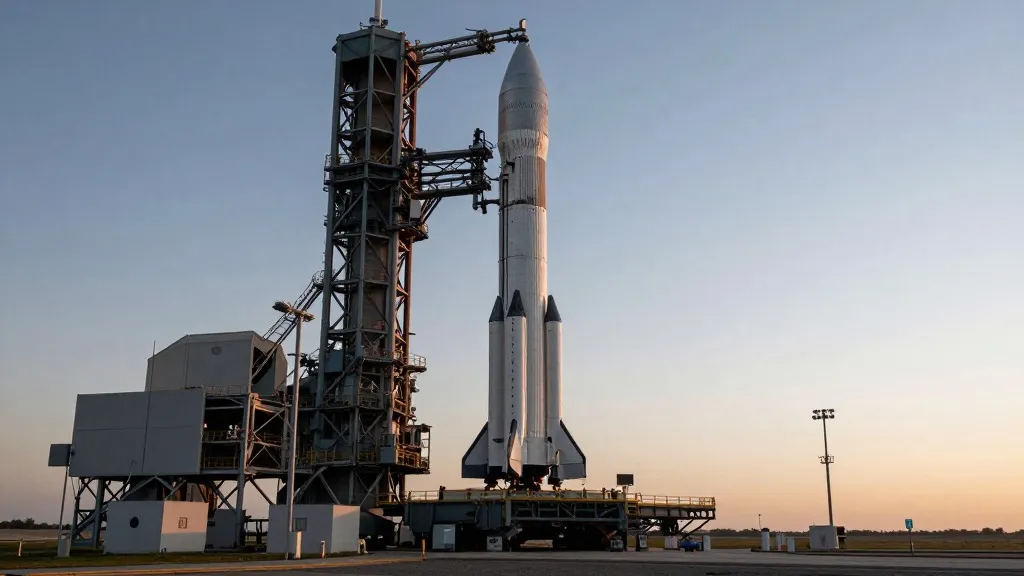
The latest estimate for the number of Starship launches required to support a crewed Moon landing is twenty-two. This figure emerged from a recent safety panel meeting and represents a significant shift in how NASA is planning for its most ambitious lunar mission. It is a number that has been closely guarded by the agency, often treated with the same secrecy as sensitive nuclear codes, but it is now becoming a central point of discussion in Washington and among aerospace experts.
This specific metric calculates how many times SpaceX’s Starship rocket must fly to low-Earth orbit to assemble a fuel depot. That depot is necessary to fully load a Starship-based lunar lander with liquid oxygen and methane propellant. Once fueled, the lander can travel to the Moon, allow astronauts to walk on its surface, and then return the crew back to lunar orbit. Without this massive amount of pre-positioned fuel, the lander cannot make the trip.
For several years, NASA has avoided giving a precise answer to this question. The agency’s standard response has been that they do not know for sure and therefore prefer not to speculate. In 2023, Lisa Watson-Morgan, who served as the director of NASA’s Human Landing System, told reporters that while the agency had a general idea, she was reluctant to state an exact number. She later described the estimate as being in the high single digits to the low double digits, which would have implied roughly a dozen launches.
Other officials have offered different guesses over time, with some citing the high teens as the likely requirement. The underlying hope has always been that SpaceX would dramatically improve the lift capacity of the Starship vehicle. If the rocket could carry more fuel per flight, the total number of tanker missions needed to fill the depot would decrease. A lower number would mean a faster and potentially cheaper path to the lunar surface.
However, concerns are growing among some NASA officials that these dramatic improvements in lift capacity may not be arriving soon enough. There is a fear that the Starship might not play a meaningful role in returning humans to the Moon within this decade if the fueling process remains as complex and numerous as the latest estimates suggest. The gap between the hoped-for efficiency and the projected reality is widening, creating pressure on the Artemis program timeline.
The new estimate surfaced on Thursday during the quarterly meeting of the NASA Aerospace Safety Advisory Panel. The panel, which provides independent advice on safety issues, held a session focused on the risks associated with the Artemis Program. During this discussion, panel member Charlie Precourt, a former NASA astronaut, spoke about the various hazards involved in landing humans on the Moon. His remarks highlighted the logistical challenges that underpin the twenty-two launch figure.
This number is not just an abstract calculation; it represents a massive operational burden. To execute twenty-two launches, SpaceX would need to fly a dedicated depot Starship to orbit first. Then, twenty-one additional tanker Starships would need to fly out to transfer propellant to that depot. This is a considerable volume of traffic in low-Earth orbit, requiring precise coordination and reliable performance from every single vehicle involved in the sequence.
The shift from a potential dozen launches to twenty-two indicates that the engineering challenges of the mission are proving more persistent than initially hoped. While the Artemis program remains on track to send astronauts back to the lunar surface, the method for getting them there is becoming more defined and, arguably, more demanding. The focus now turns to how quickly SpaceX can refine its operations to meet these requirements.
What happens next depends on the pace of development for the Starship vehicle. If lift capacity improves as planned, the number of required launches could drop. If not, the twenty-two figure may stand, necessitating a longer preparation phase before the first crewed lunar landing. For now, the twenty-two launch estimate serves as a concrete benchmark for the next phase of planning, replacing the vague estimates that have characterized the program for the last few years.
As the agency moves forward, the transparency around this number is likely to increase. Stakeholders in the Pacific Northwest and across the country are watching closely, as the success of Artemis will hinge on these logistical details. The coming months will reveal whether the twenty-two launch scenario remains the baseline or if further adjustments are made to the plan.
Source: Ars Technica