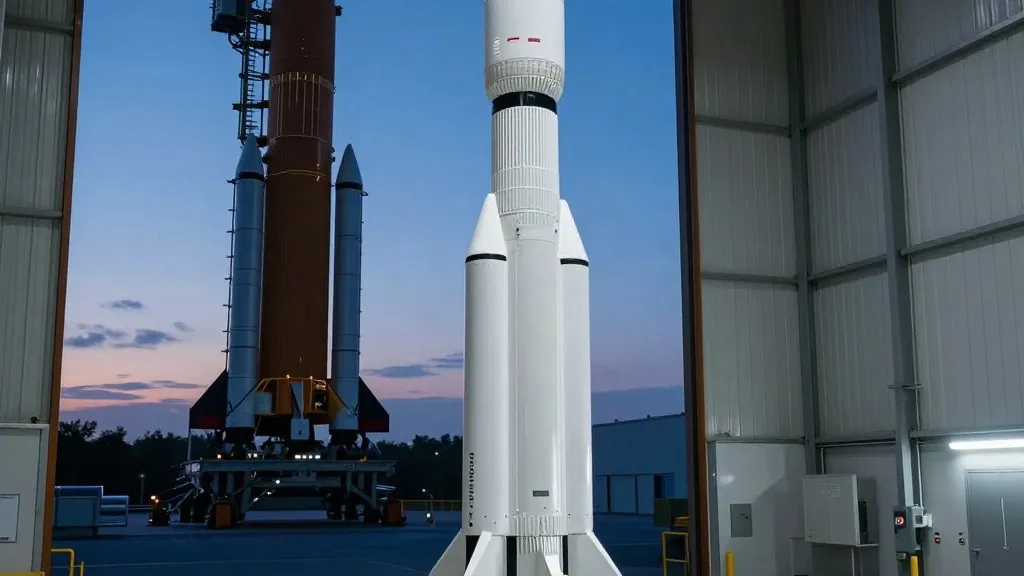
NASA Revamps Moon Landing Strategy
Space agency officials detail new docking procedures and launch schedules for lunar missions in late 2027 and 2028.
By Natalia Campos ·
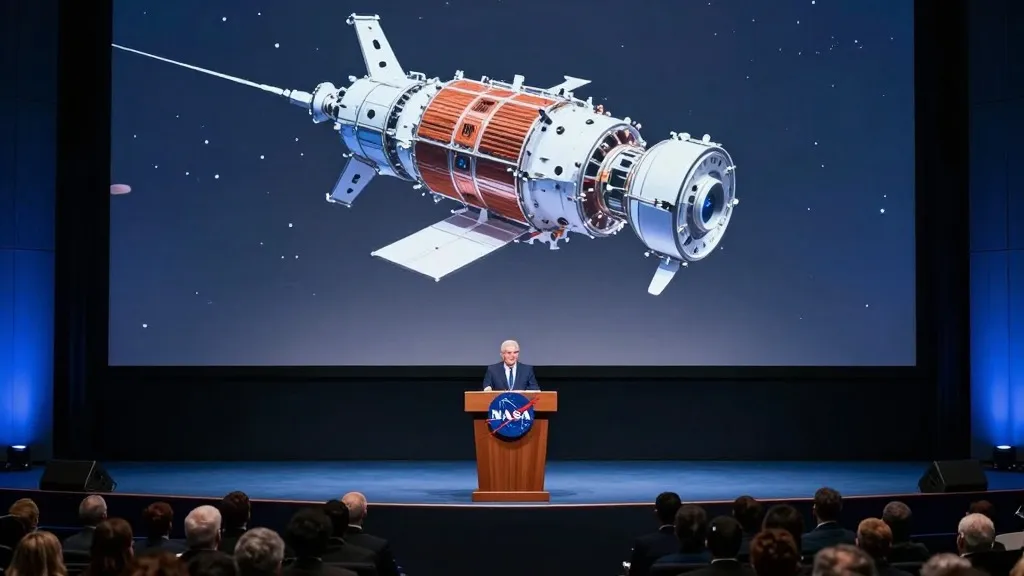
For the first time, NASA has formally confirmed significant alterations to how it will transport astronauts to the Moon, shifting the primary docking location for SpaceX’s Starship from lunar orbit to high-Earth orbit. This adjustment, revealed during a lengthy press conference on Friday, directly impacts the timeline for the Artemis program, with the agency now targeting a crewed landing as soon as 2028. The change signals a move away from previously reported architectural concepts, offering a clearer, though still ambitious, path forward for the space agency’s most ambitious exploration goals.
The shift in strategy is not without its complications. For Blue Origin, the revised plan eliminates the need for spacecraft-to-spacecraft refueling in space, a complex maneuver that had raised technical concerns. Instead, the agency’s architecture for Blue Origin’s New Glenn rocket now involves four separate launches, with the potential for the Blue Moon lander to rendezvous with the Orion spacecraft in low-Lunar orbit. These distinct pathways for the two primary lander contractors highlight NASA’s effort to tailor its requirements to the specific capabilities of each company while maintaining a unified program goal.
To understand how the agency arrived at this point, it is necessary to look back at the early months of 2026. SpaceX engineers had long lobbied NASA to remove the requirement for Orion to dock with Starship in a near-rectilinear halo orbit around the Moon. This specific orbital path required significant energy and presented other technical difficulties that complicates the mission profile. The cancellation of the Lunar Gateway project earlier this year effectively resolved this bottleneck for SpaceX, allowing the agency to pivot to the high-Earth orbit docking strategy without the need for the gateway infrastructure.
The current schedule remains aggressive but, according to officials, is grounded in existing resources. NASA Administrator Jared Isaacman stated during the presentation that the agency is on an "achievable path," citing the mandate, resources, and stakeholder support necessary to execute the plan. "We have the mandate, we have the resources, and the support from our stakeholders to be able to execute, and that’s what we intend to do," Isaacman said. This confidence contrasts with the skepticism often directed at long-term space timelines, particularly given the history of delays in the Artemis program.
The immediate next step is the Artemis III mission, which is currently slated for launch by the summer of 2027. This mission will serve as a critical demonstration, involving the docking of both the Blue Moon and Starship landers in the vicinity of Earth. It is a crucial precursor to the actual lunar landing, which is targeted for 2028 under the Artemis IV mission. The success of the 2027 demonstration will largely determine whether the 2028 landing date holds or if further adjustments are required.
While the agency has acknowledged these substantial changes, it is worth noting that much of this information had been previously reported by various outlets. However, this Friday’s conference marked the first instance where NASA laid out the details in a formal, comprehensive manner. The level of detail provided offers a clearer picture of the operational changes, moving beyond speculation to a structured plan that accounts for the specific needs of both SpaceX and Blue Origin.
The decision to allow Blue Origin’s Blue Moon lander to potentially rendezvous in low-Lunar orbit, rather than requiring complex in-space refueling, simplifies the mission architecture for that contractor. This flexibility suggests that NASA is prioritizing reliability and execution speed over the uniformity of the previous plan. By removing the refueling requirement, the agency reduces the number of high-risk maneuvers required before a crew can reach the lunar surface.
For SpaceX, the move to high-Earth orbit docking represents a significant reduction in complexity. The near-rectilinear halo orbit was a particularly demanding trajectory, and its removal addresses a key concern raised by SpaceX engineers in early 2026 meetings. This change aligns the mission architecture more closely with the capabilities of the Starship vehicle, potentially accelerating the development and testing timeline for the lander.
As the program moves forward, the focus shifts from planning to execution. The upcoming months will see the agency preparing for the 2027 demonstration mission, with the ultimate goal of placing boots on the lunar surface in 2028. While the plans are now more defined, the challenge of holding to these dates remains. The success of the Artemis program will depend on the ability of both NASA and its contractors to navigate the technical and logistical hurdles that lie ahead in the coming year.
Source: Ars Technica